🔢 Day 2 – Activity 1: Mastering German Numbers (1–10) 🇩🇪
Willkommen zurück! 🎉 Today we’ll learn Zahlen — Numbers! You’ll count from eins (1) to zehn (10) and use them in real-life German sentences. From ordering 2 breads 🍞 to buying 1 Liter Milch 🥛, these numbers are part of your everyday life in Germany! ❤️🖤💛
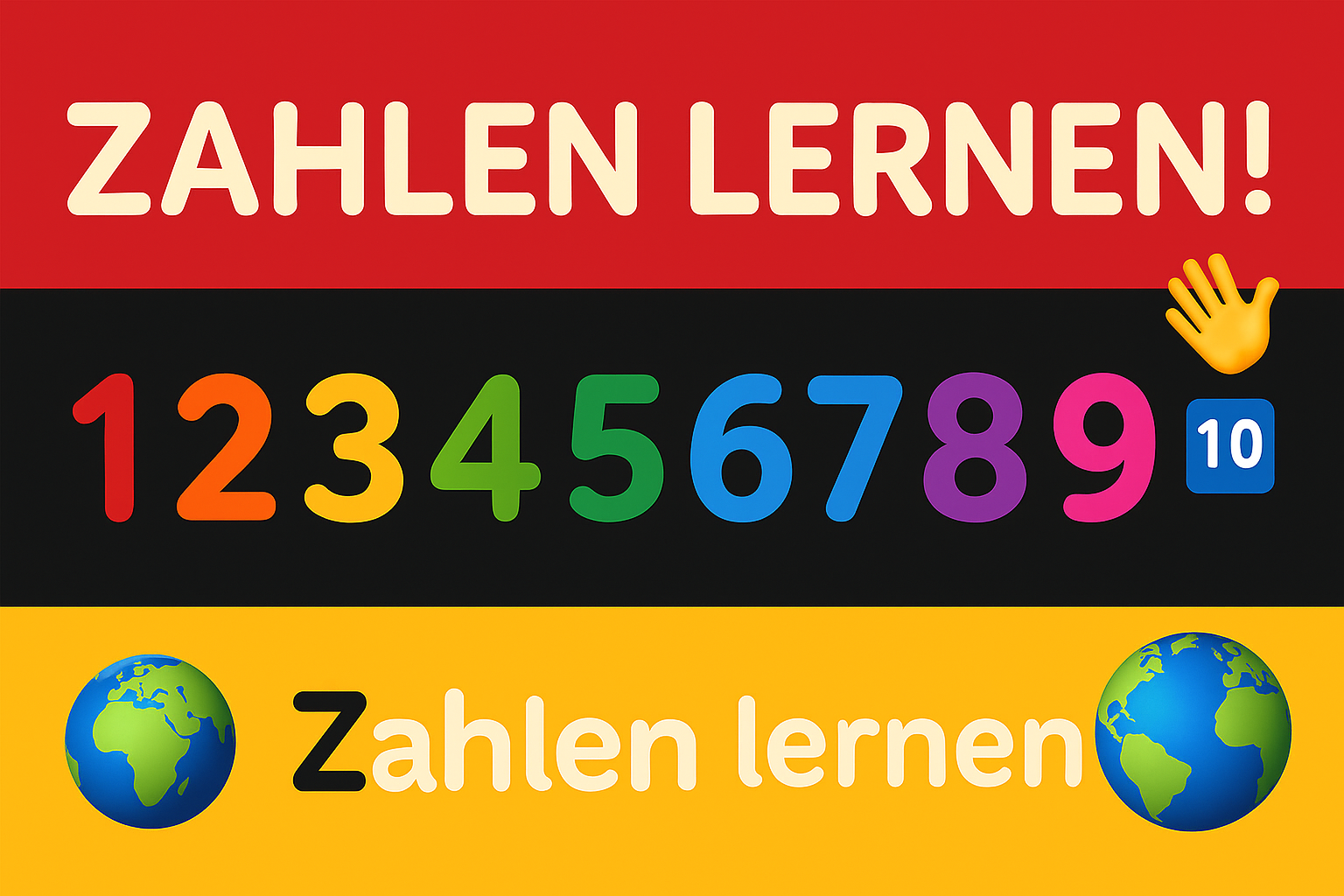
📊 German Numbers 1 to 10 — Deutsch, English & Hindi (देवनागरी)
| 🔢 Number | 🇩🇪 German | 🗣️ Pronunciation | 🇬🇧 English | 🇮🇳 Hindi (देवनागरी) |
|---|---|---|---|---|
| 1️⃣ | eins | ains | one | एक |
| 2️⃣ | zwei | tsvai | two | दो |
| 3️⃣ | drei | drai | three | तीन |
| 4️⃣ | vier | feer | four | चार |
| 5️⃣ | fünf | fünf | five | पाँच |
| 6️⃣ | sechs | zex | six | छः |
| 7️⃣ | sieben | zeeben | seven | सात |
| 8️⃣ | acht | ahkt | eight | आठ |
| 9️⃣ | neun | noyn | nine | नौ |
| 🔟 | zehn | tsayn | ten | दस |
🛒 Numbers in Daily Life — Practical Examples
Let’s see how numbers are used in everyday German conversations — especially while shopping, cooking, or talking about family!
- 🍞 zwei Brote — two breads (दो ब्रेड)
- 🥛 ein Liter Milch — one liter of milk (एक लीटर दूध)
- 🍚 fünf Kilo Mehl — five kilograms of flour (पाँच किलो आटा)
- 🍎 drei Äpfel — three apples (तीन सेब)
- 🍌 sechs Bananen — six bananas (छः केले)
- 🪑 vier Stühle — four chairs (चार कुर्सियाँ)
- 👨👩👧👦 eine Familie mit vier Personen — a family with four people (चार लोगों का परिवार)
- 🚲 zwei Fahrräder — two bicycles (दो साइकिल)
- ☕ acht Tassen Kaffee — eight cups of coffee (आठ कप कॉफी)
- 📦 zehn Pakete Zucker — ten packets of sugar (दस पैकेट चीनी)
🧠 Grammar Tip: When a number is followed by a noun, the noun is usually plural (e.g. zwei Brote, drei Äpfel), except with “eins” — ein Brot (one bread). The word ein also changes with gender (ein Mann, eine Frau, ein Kind). 🇩🇪
🗣️ Practice Sentences — Use Numbers in Real Life!
- Ich kaufe drei Tomaten. — I buy three tomatoes. 🍅
- Er hat zwei Schwestern. — He has two sisters. 👧👧
- Wir brauchen ein Kilo Reis. — We need one kilo of rice. 🍚
- Sie trinkt fünf Gläser Wasser. — She drinks five glasses of water. 💧
- Ich sehe zehn Autos auf der Straße. — I see ten cars on the street. 🚗🚗🚗
🌍 Cultural Note — How Germans Count ✋
In Germany, people start counting with the thumb (not the index finger). So “eins” = thumb ☝️, “zwei” = thumb + index ✌️. Remember this when you order at a bakery or café — hold up your thumb for one! 🥐☕
🧩 Mini Quiz — Test Your Numbers!
- What is “vier Brote”?
🗝️ Answer
Four breads 🍞🍞🍞🍞 - Translate: “I need 5 kg flour.”
🗝️ Answer
Ich brauche fünf Kilo Mehl. 🇩🇪 - How do you say “3 bananas” in German?
🗝️ Answer
drei Bananen 🍌🍌🍌
✅ Recap & Next Steps
- 🎯 You learned numbers 1–10 with pronunciation and Hindi meanings.
- 🍽️ Practiced using numbers in real-life shopping and family conversations.
- 💡 Discovered how Germans count with their fingers (starting with the thumb!).
Next: Day 2 – Activity 2: Time in German (Uhrzeit) 🕐⏰ — you’ll learn how to say what time it is, ask questions like “Wie spät ist es?”, and talk about your daily routine!